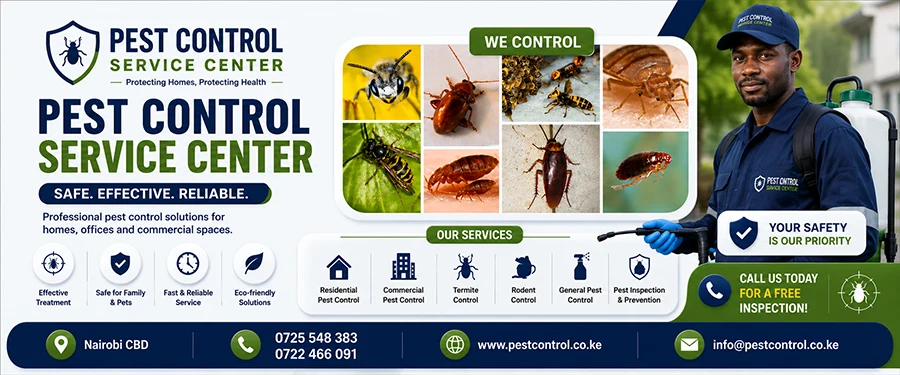
Cockroaches are among the most common household pests in Kenya, thriving in warm, humid climates like Nairobi's and other urban centers across the country. These resilient insects are not just unsightly — they carry bacteria, trigger allergies and asthma, and contaminate food surfaces. Understanding the different types of cockroaches, what draws them into homes and businesses, and how to keep them away is the first step toward a pest-free environment.
Common Types of Cockroaches Found in Kenya
German Cockroach
The German cockroach is the most frequently encountered species in Kenyan kitchens and restaurants. Light brown with two dark parallel stripes behind the head, they are small (about 1.3–1.6 cm) but reproduce extremely fast, making infestations spread quickly if left untreated. They favor warm, moist areas near stoves, sinks, and refrigerators.
American Cockroach
Larger and reddish-brown, the American cockroach (often called the "flying cockroach" locally) can grow up to 5 cm long. It prefers damp, dark spaces such as drains, basements, sewers, and bathroom pipework. In Nairobi, these are commonly reported in older buildings with aging plumbing.
Oriental Cockroach
Dark brown to black and slower-moving, the Oriental cockroach thrives in damp, cool environments like drains, garbage areas, and crawl spaces. They are often called "water bugs" because of their strong association with moisture and decaying organic matter.
Brown-Banded Cockroach
Smaller than the German cockroach, this species prefers warmer, drier areas of a home — such as electronics, cupboards, and upper cabinets — rather than kitchens and bathrooms alone.
What Attracts Cockroaches Into Your Home or Business
Cockroaches are opportunistic survivors, and a few key conditions make properties in Nairobi and across Kenya particularly attractive to them:
1. Food residue and crumbs — Uncovered food, dirty dishes, and crumbs on counters or floors are a primary food source. Even small amounts of grease on a stove can sustain a colony.
2. Moisture and standing water — Leaking pipes, damp sponges, wet mops, and poor drainage create the humid conditions cockroaches need to survive. Kitchens and bathrooms are especially vulnerable.
3. Clutter and cardboard — Stacks of newspapers, cardboard boxes, and cluttered storage areas provide hiding spots and breeding grounds, particularly in warehouses, shops, and stores.
4. Warmth — Cockroaches are drawn to warm appliances like refrigerators, water heaters, and electronics, especially during Nairobi's cooler months.
5. Poor waste management — Overflowing garbage bins, uncollected refuse, and open compost areas are magnets for cockroaches, particularly in densely populated estates and commercial kitchens.
6. Entry points — Cracks in walls, gaps around pipes, unsealed windows, and damaged door seals give cockroaches easy access from neighboring units, drainage systems, or the outdoors.
How to Keep Cockroaches Away
Maintain Strict Kitchen Hygiene
Wipe down counters and stovetops daily, wash dishes promptly, and store food in airtight containers. Avoid leaving pet food out overnight.
Fix Leaks and Reduce Moisture
Repair dripping taps and leaking pipes promptly. Ensure bathrooms and kitchens are well-ventilated, and wipe up standing water after use.
Declutter Regularly
Remove unnecessary cardboard, newspapers, and clutter from storage rooms, garages, and kitchen cabinets. Cockroaches use these materials both for shelter and as an egg-laying surface.
Seal Entry Points
Caulk cracks in walls and skirting boards, fit door sweeps, and seal gaps around pipes and drains. This is especially important in older buildings and multi-unit apartments common in Nairobi.
Manage Waste Properly
Use bins with tight-fitting lids, dispose of garbage regularly, and keep outdoor waste storage areas away from entry points into the building.
Use Baits, Gels, and Traps
Cockroach baits and gel treatments placed near suspected hiding spots (behind appliances, under sinks, along skirting boards) are effective for ongoing control between professional treatments.
Schedule Professional Pest Control
For persistent or large-scale infestations — particularly in commercial kitchens, apartment blocks, warehouses, and hospitality establishments — professional pest control offers the most reliable long-term solution. Licensed technicians use targeted treatments such as residual sprays, gel baiting programs, and Insect Growth Regulators (IGRs) that break the reproductive cycle, alongside routine inspections to catch new activity early.
Why Professional Treatment Matters
While DIY methods help manage minor cockroach sightings, established infestations often require professional intervention. Cockroaches hide in inaccessible areas — wall voids, drainage systems, and electrical panels — that household sprays cannot reach effectively. Professional pest control companies conduct thorough inspections to identify entry points and breeding sites, then apply treatments matched to the specific cockroach species involved, since German, American, and Oriental cockroaches often require different control strategies.
Cockroaches are a persistent challenge in Kenya's warm, humid climate, but understanding which species you're dealing with — and what draws them into your space — makes prevention far more effective. Consistent hygiene, moisture control, decluttering, and sealing entry points go a long way, while professional pest control provides the thorough, lasting solution needed for serious infestations in homes, restaurants, offices, and commercial properties across Nairobi and beyond.